
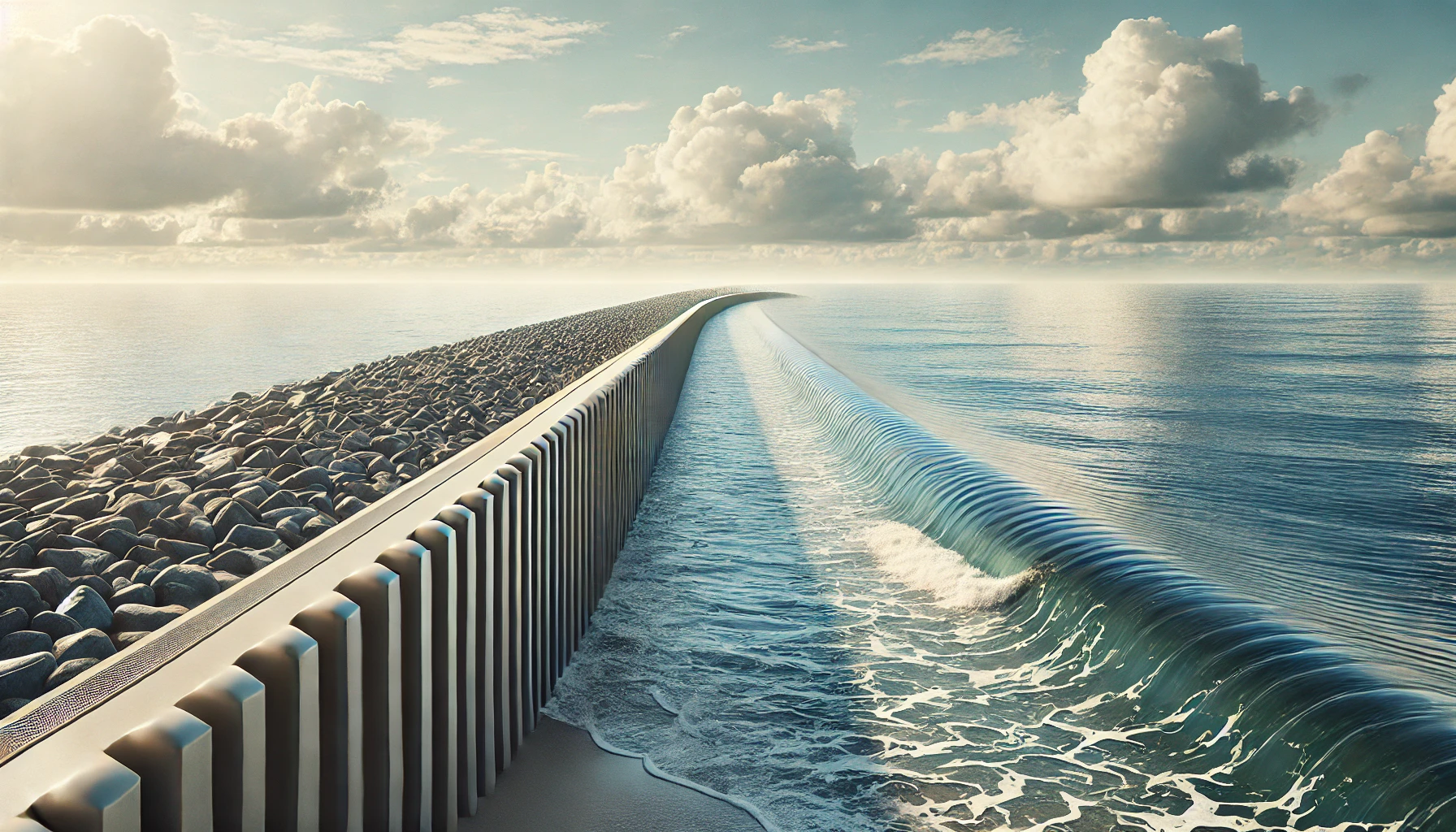
Hold the line. Restore the shore.
Our seawall systems are built from recycled plastic, engineered for the century-scale storm, and designed to keep the shoreline alive while they do it.
Two failures, one structure.
Conventional seawalls fail in two distinct ways, and most coastal communities find out about both the hard way. The first is structural — inadequate height, foundation or flex. The second is ecological — the structure holds, but the beach, dune, marsh and fishery in front of it die a quiet death over the next decade.
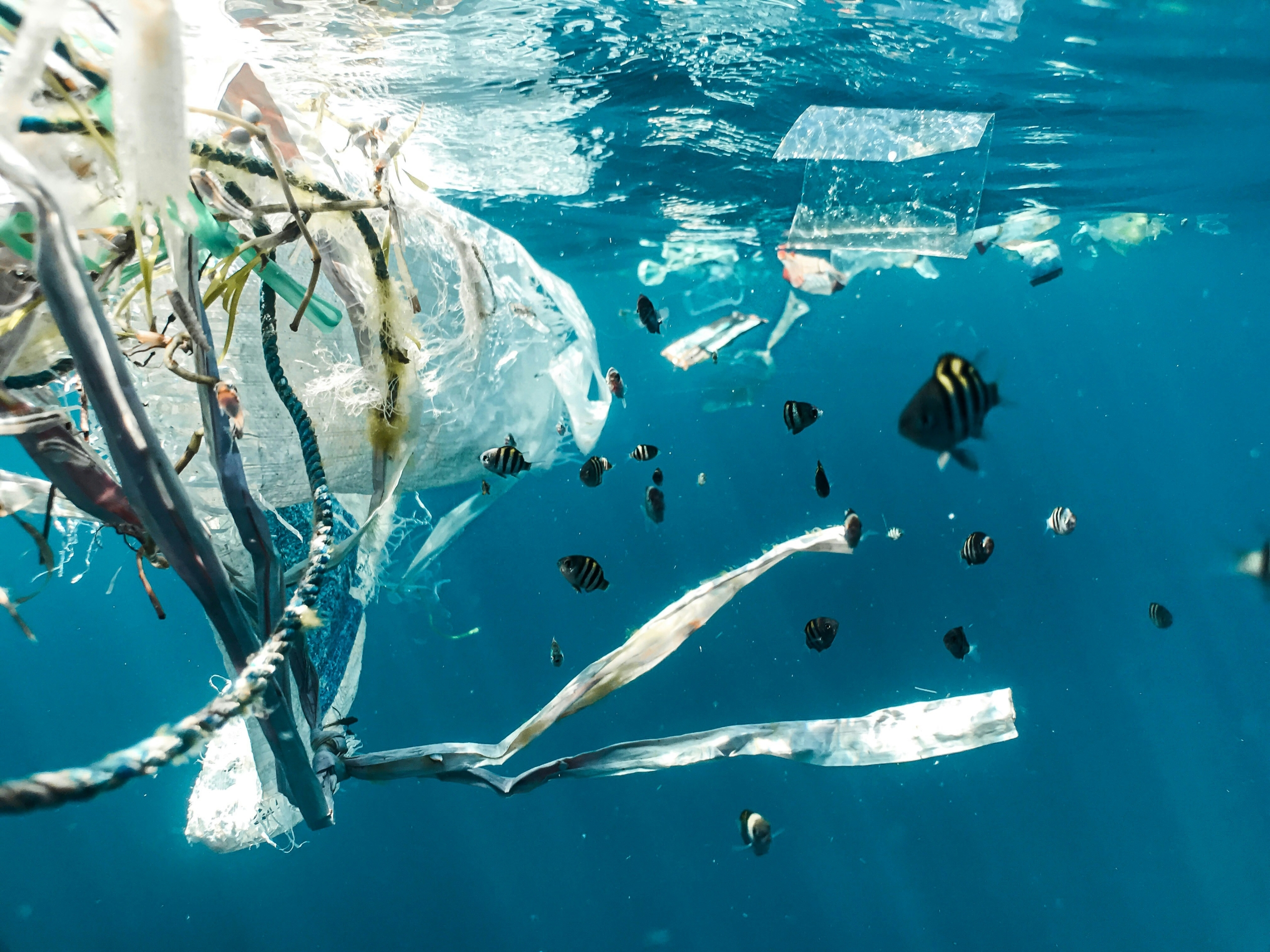
Our seawalls are designed to address both. The structural envelope comes from century-scale storm-surge and sea-level-rise modelling. The ecological envelope comes from marine biology considerations built into the product from the material up — because our modules are made from discarded plastic cycled at full structural value.
Structural failure
Wall is overtopped, undermined or breached.
Ecological failure
Wall holds. Beach, dune and fishery in front collapse.
Anatomy of an R5 seawall.
Five engineering choices — each labelled in the cross-section — separate our recycled-plastic seawall from a conventional concrete barrier.
Interlocking modules
Recycled-plastic composite units that key into each other so the wall behaves as a single load-sharing structure, not a row of independent panels.
Stabilised matrix
Our proprietary rejuvenation technology gives the recycled polymer matrix the structural performance to handle century-scale surge.
Living-shore face
Habitat texture engineered into the seaward face from day one - oysters, barnacles, marsh root systems, the whole intertidal community gets a place to colonize.
Surge + SLR envelope
Designed against century-scale storm-surge and sea-level-rise modelling - not the last storm, the next one.
Embedded sensors
Strain and scour monitoring built into the modules - so the asset reports its own condition rather than waiting for someone to notice the failure.
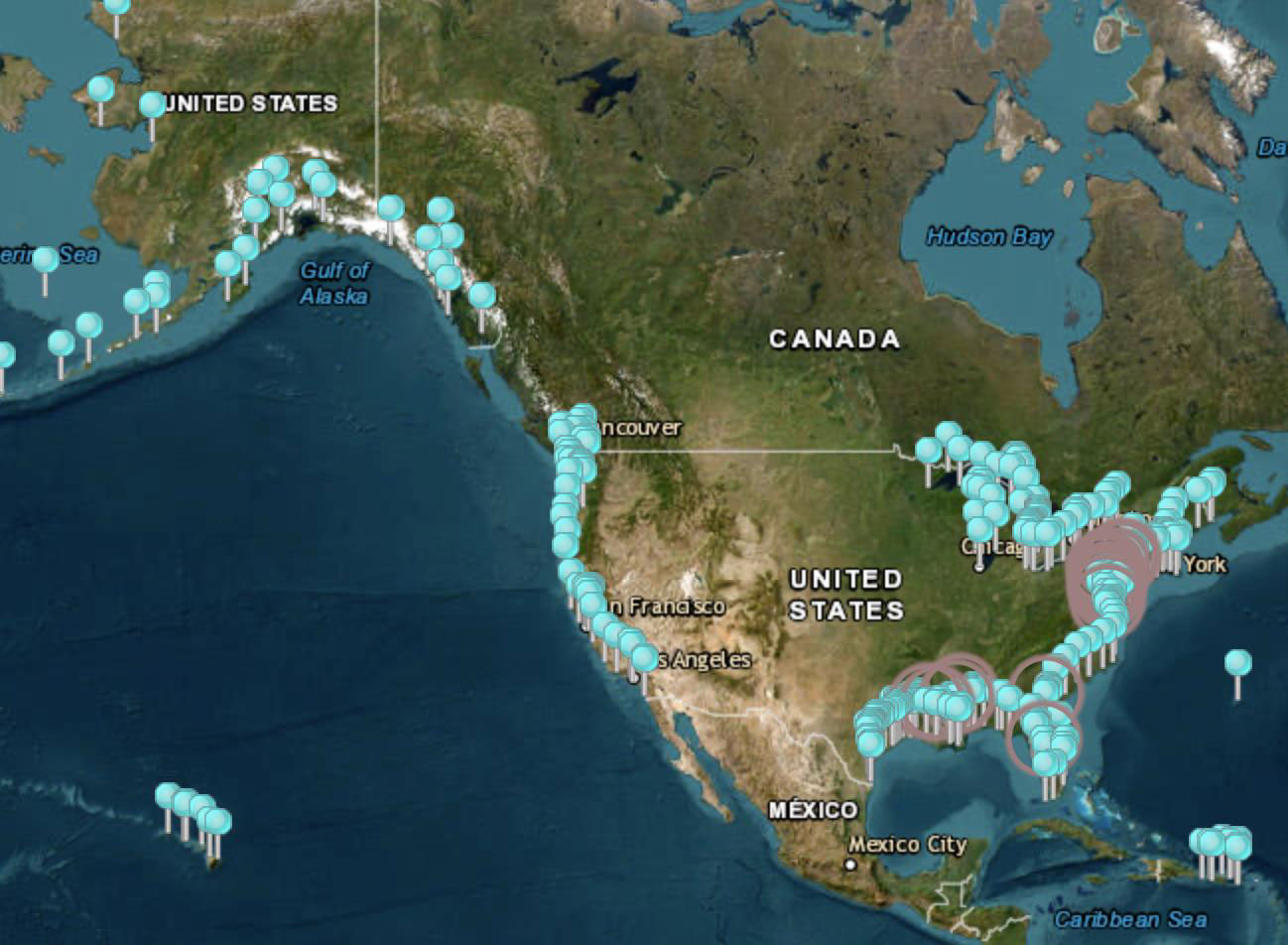
Three coastal contexts where our system is doing the work.
Municipal shorelines
Cities and towns protecting waterfront neighbourhoods, public beaches and recreational coast - where the seawall has to do its structural job and stay something residents are willing to live next to.
Industrial & port
Keeping working waterfronts - ports, processing plants, intake structures - operational through surge events that would otherwise shut them down.
Critical infrastructure
Protecting water treatment, substations and transport links whose failure in a surge event would cascade inland for days.



Have a shoreline that needs a plan?
Bring us the coordinates, the surge data and the community context.
Book a site visit arrow_outward